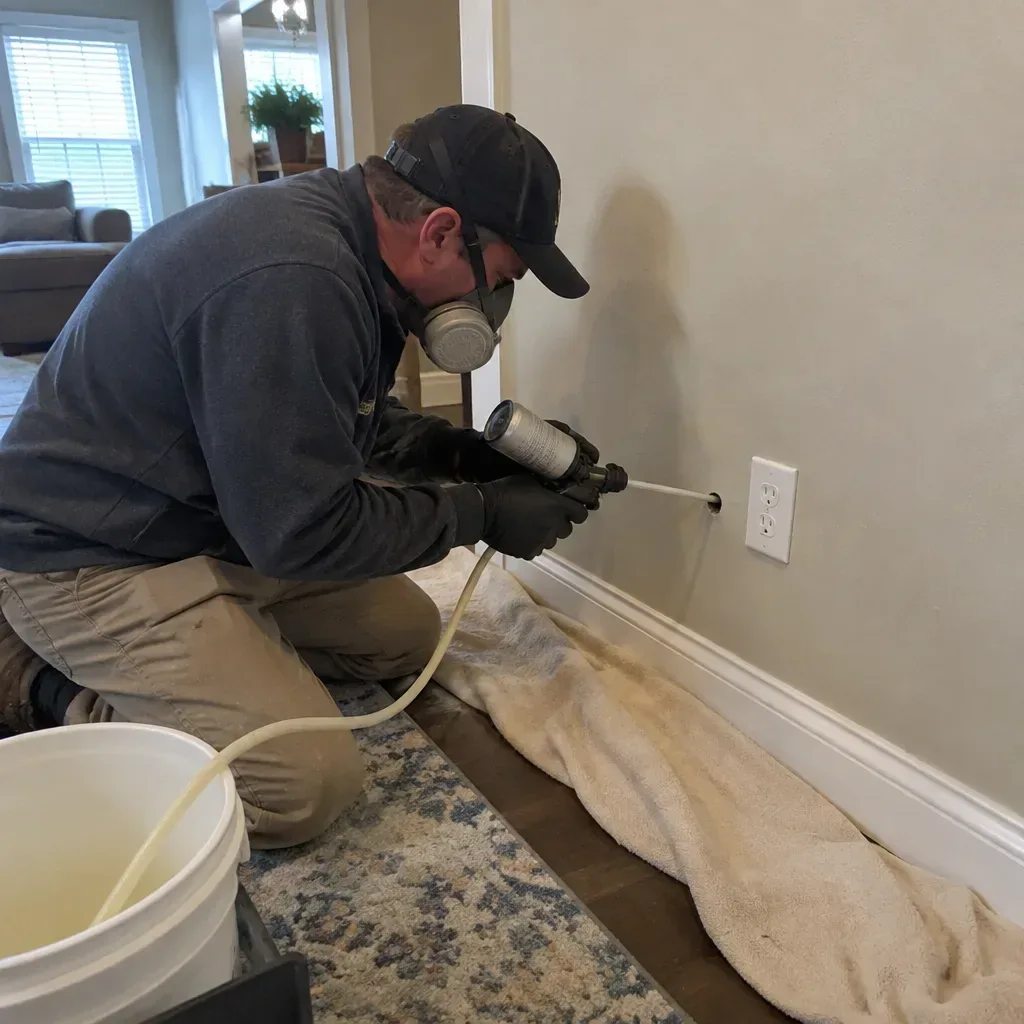
When Termite Foam Fits Avondale Wall Voids
In Avondale, termite foam suits a reachable, label-approved void; inspection findings show whether suspected activity fits.
Foam may fit when an inspection locates termite galleries in a connected void and its expanding carrier can reach them. It can coat surfaces along that path, while separated cavities, packed material, or narrow breaks may leave gaps. Product directions and site conditions determine whether that placement is appropriate.
Foam Formulation and Expansion
On a day you spot a damp-looking line indoors, its location matters more than its appearance. In Avondale, termite foam is a termiticide carried in an expanding material. Foam injection describes placing that material into an identified cavity through an access point. As it expands, it can coat surfaces within reach. That makes it a possible wall void treatment when signs point to activity inside an accessible space. The key question is whether the target cavity and product use fit the evidence.
The foam spreads from its placement area, then settles and leaves treated material on surfaces it contacts. That can help address activity in a hollow space where ordinary access is limited. But expansion follows the shape of the cavity; it does not seek out termites. A narrow gallery in wood may not open into the larger wall space. A mark near Tierra Verde Lake Park or elsewhere in Avondale needs assessment before anyone can connect it to a particular void.
You find discarded wings beside a wall in Avondale. Note the room, wall face, and nearby signs before anyone disturbs them. A homeowner near Friendship Park might mark the spot on a room sketch; a shop near Festival Fields could note the affected counter or storage wall. Those details help an inspection connect visible signs with a concealed cavity. Termiticide foam expands after it is placed. It can coat reachable surfaces in a void or gallery, but partitions and debris can interrupt its spread. Findings and product directions shape whether that cavity suits foam.
Identifying a Reachable Termite Gallery
Start with what you noticed, not with a guess about where foam might go. Record the room, wall, and approximate height of a tube, damaged wood, or other sign. In Avondale, someone at a home near Staggs Park might note a garage wall; a shop owner might record a storage-room corner. A simple location record helps a professional compare the visible clue with accessible spaces nearby.
Next, describe what you can see without opening or disturbing the area. Note whether the sign appears on wood, a wall surface, or near a floor edge. A hollow sound alone does not identify termite activity or show where a gallery runs. At a home near Rose Park, for instance, a dated note and room description can help distinguish one observation from another during review.
A professional can compare those notes with visible evidence and the structure’s accessible areas. The inspection may find damage, signs of activity, or conditions that support termites. It can also show that the suspected cavity is blocked or separate from the observed sign. These findings help clarify whether foam injection has a reachable target. They do not establish that every concealed space has been checked.
Obstructions Within Concealed Spaces
Cavities differ. Insulation, framing, fire stops, and enclosed compartments can interrupt the path between an access point and the suspected area. Foam may fill part of an open space while leaving a narrow passage or separated section untouched. A visible opening therefore does not show how far the material can spread. Ask which specific space the assessment identifies and what physical features may limit access.
The proposed use also has to fit the product label and conditions at the property. Labels set permitted sites and application limits; the surrounding space can affect whether that use is suitable. A professional should review the label and explain how the intended cavity fits its directions. If the target or permitted use is unclear, the available observations are not enough to support a sound conclusion.
Site Fit and Product Directions
Foam placement addresses a defined area, so it cannot confirm that hidden wood is sound or that activity is absent elsewhere. Termites can damage wood behind an intact painted surface. A report should make clear what areas were observed, what signs were found, and what remains uncertain. In Avondale, the record can help you compare a later observation with the original location and findings.
Review the proposed target alongside the clues you recorded. Does the observed sign connect plausibly to an accessible void? Can the product be used there under its label? Are barriers or disconnected spaces part of the assessment? The pros we connect you with should explain those findings in plain terms. That review tells you whether foam fits the identified space, while leaving any unexamined areas clearly identified.
Notes for Reviewing Foam Fit
- Record the room, wall, and location of each sign; note nearby landmarks such as Tierra Verde Lake Park only when they help identify the property.
- Ask whether the suspected activity connects to the specific cavity proposed for foam, and what framing, insulation, or barriers may limit reach.
- Review whether the product label allows the intended space and ask which areas remain outside the professional’s assessment.
- For a home near Friendship Park, record the room, wall, and visible sign; foam matters only if inspection links activity to a reachable void.
- At a small shop near Festival Fields, a known gallery may be a candidate when the product label permits that site and use.
- Near the Agua Fria River, note insulation, framing, or blocked cavities; these can interrupt foam distribution before it reaches suspected activity.
Termite Service FAQs
When can expanding foam reach a termite gallery?
A concealed wood-to-soil connection can provide an entry path for subterranean termites. An assessment should connect the observed clue to the proposed cavity. In Avondale, the space’s framing and other barriers matter because they can limit where foam reaches. A sign by itself cannot establish that foam is suitable.
Can insulation block foam from reaching termites?
No. Foam expands within the space it reaches from its placement area. Framing, insulation, and closed-off sections may leave other parts untouched. A treated cavity does not establish that termites or damage are absent from connected walls, wood galleries, or separate areas. Ask the professional to identify the intended space and any areas the assessment could not connect to it.
What inspection findings help determine if foam fits?
Avoid opening a wall or disturbing a suspected tube or damaged area to investigate it. Record where you saw the sign and describe its appearance. A professional can compare your notes with accessible evidence and explain whether an enclosed space may relate to it. This keeps the observation available for review without assuming the hidden cavity’s contents or extent.
Have the Proposed Void Assessed
Ask the pros we connect you with to review the inspection findings, identify the target void, and check whether the labeled use fits.
Call (623) 281-0768