Why Subterranean Termites Build Tubes
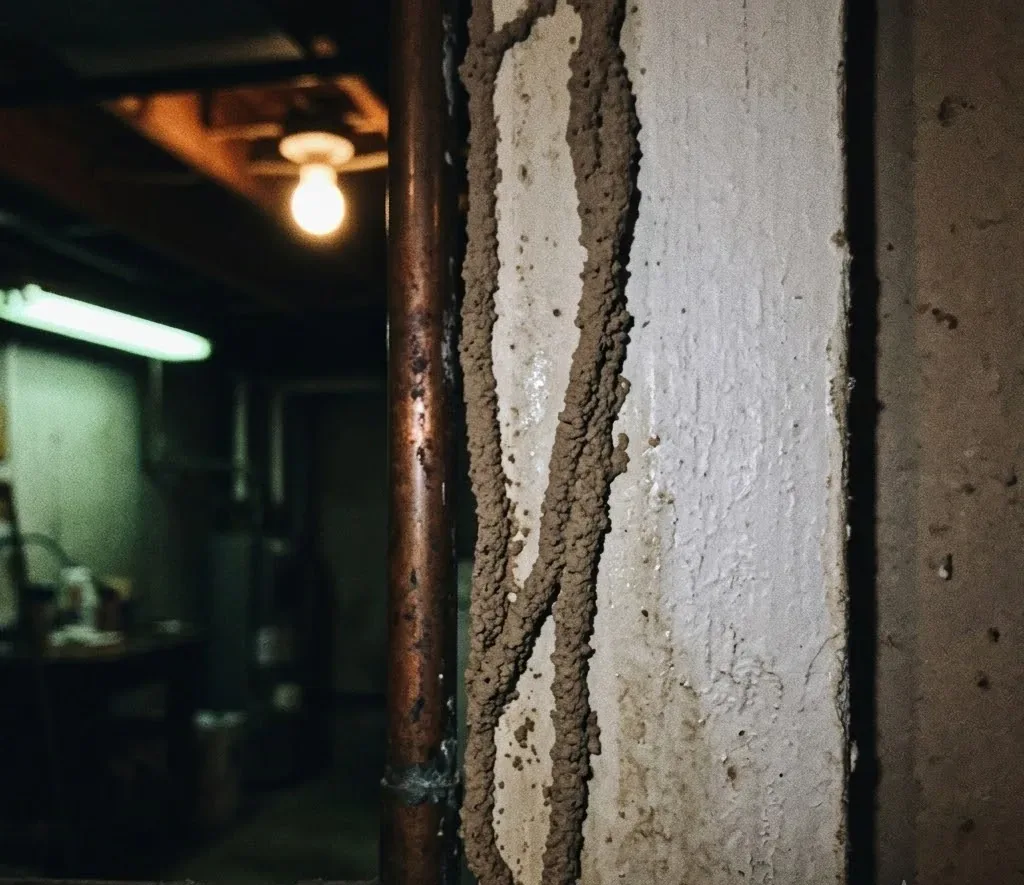
On Tuesday, you notice a narrow dirt ridge climbing the outside foundation of your Avondale home. A termite mud tube is a covered passage made from soil and other material. Subterranean termites use these routes to travel between soil and food while staying sheltered. The tube suggests a possible route toward the structure. It cannot show how far termites traveled, whether they remain active, or what lies beyond the visible section.
At a small commercial property near the Arizona Canal, a tube might appear as a thin, uneven strip against concrete. Some are straight; others bend around a seam or follow a surface joint. Their rough, packed texture can resemble dried soil. A tube may connect ground-level soil with a crack or nearby wood, but its shape alone does not identify the insects. In Avondale, note what you see without treating appearance as proof.
What a Foundation Tube Can Tell You
When you find a narrow dirt tube on a foundation in Avondale, leave it in place. Subterranean termites build covered routes from soil toward wood. A tube may climb concrete or follow a seam; note where it meets the ground or a structure. Whether your home is near Friendship Park or Festival Fields, or your business is by the Agua Fria River, photograph the tube and its location. The pros we connect you with can inspect the route and possible entry points. Scraping it off can erase useful evidence.
Leave the tube in place until it can be assessed. Breaking it removes part of the evidence and may make its route harder to follow. Avoid scraping, painting over, or spraying it. A small business near the Agua Fria River should follow the same care. Keep people from brushing against the spot if practical. Then contact a provider and explain what you found. The pros we connect you with can advise what to do before an inspection.
Where Tubes Appear and What to Record
Check the exposed foundation where it meets soil, along concrete joints, and near places where pipes or other lines pass through. A tube may climb upward, cross a seam, or turn toward a sheltered edge. At an Avondale house near Festival Fields, look from safe, accessible areas without digging or pulling apart materials. At a small commercial property, note which side of the building holds the tube. Its position helps an inspector trace the possible entry route.
Before arranging an inspection, take one close photo and another showing the tube’s position on the building. Include a nearby corner, joint, or other fixed reference so the location is clear later. Write down when you saw it and which side of the Avondale property it faces. A shop near White Tank Library can record whether the tube sits beside a doorway or along a foundation seam. Keep the tube undisturbed while you gather these details.
What an Inspection Can Clarify
During an inspection, the pros we connect you with can examine the tube and accessible areas around its route. What an inspection can establish depends on which areas are accessible. Findings can help distinguish a suspected path from evidence of a wider concern. Arizona requires termite businesses and applicators to be licensed. A report's limits help explain what its findings can cover.
The useful next step is to preserve the clue, record its location, and arrange an inspection. Do not rely on the tube alone to decide whether activity continues or how termites entered. A house near Catlin Court and a small commercial building near Goodyear Farms Historic Cemetery may have different access points and inspection limits. Share your photos and notes with the provider. An inspection can assess activity and possible entry routes before you change the area.
Dealing with termite signs at your home?
After a monsoon evening, you may spot soil ridges at the foundation or wings beside a window. Take a clear photo of each clue before cleaning the area or moving anything nearby. In Avondale, tell the pros we connect you with where you saw the change. Ask what preparation would be needed before any treatment begins. Ask which areas they can inspect, what access they need, and whether treatment fits the findings. Before booking, confirm coverage, appointment availability, visit fees, and written follow-up terms.